
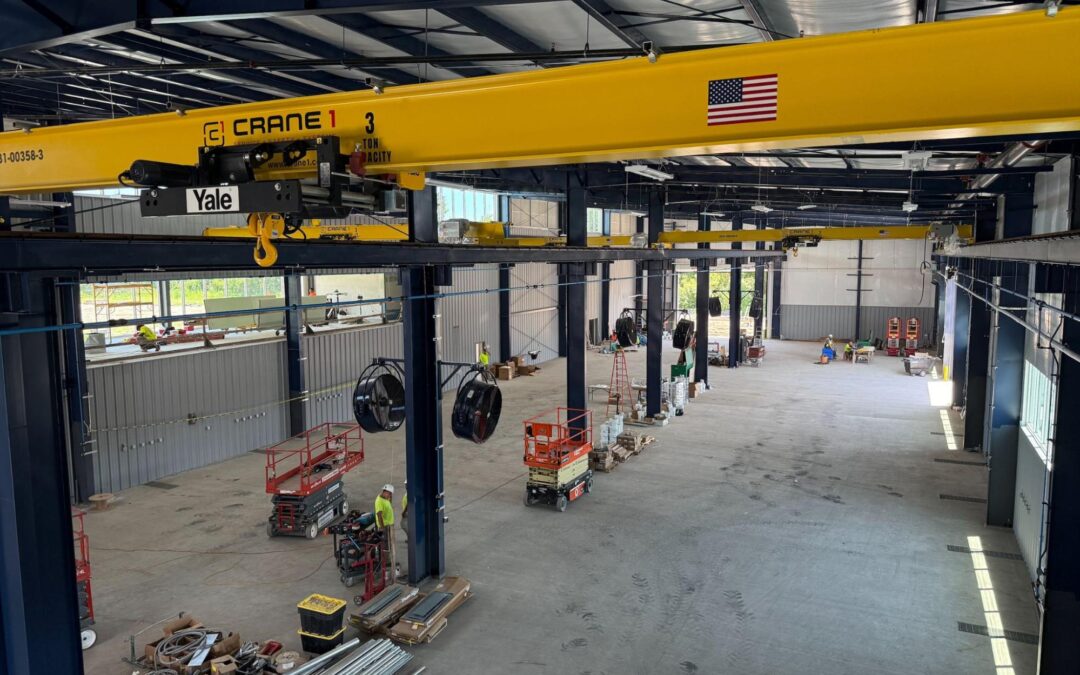
Choosing an overhead crane system for a manufacturing facility involves more than selecting a lifting capacity. The crane you install directly affects production flow, facility layout, worker safety, and long-term operating costs. A properly designed new crane system helps materials move efficiently through your facility. The wrong system can create workflow bottlenecks, safety concerns, and costly downtime.
For manufacturing facilities that rely on heavy materials, large components, or repetitive lifting, selecting the right overhead crane system is a critical operational decision. Whether you are planning a new facility or upgrading an existing one, understanding how crane capacity, span, duty cycle, and facility structure work together will help ensure the system supports production rather than limiting it.
Crane 1 works with manufacturers across the United States to evaluate lifting requirements, design crane systems, and support facilities with inspections, repairs, modernization, installation, and long-term crane maintenance services.
This guide explains the key factors manufacturers should evaluate when choosing an overhead crane equipment for their facility.
Key Takeaways
- The right overhead crane system improves production efficiency and worker safety in manufacturing facilities.
- Crane selection should consider load capacity, duty cycle, facility layout, and structural support requirements.
- Different crane types such as bridge cranes, gantry cranes, and jib cranes serve different manufacturing environments.
- Proper planning helps avoid costly retrofits, downtime, and workflow disruptions later.
- Working with an experienced crane service provider helps ensure the crane system is engineered for long-term performance and OSHA compliance.
Understand Your Load Requirements First
Start with the basics.
- What is the maximum weight you need to lift?
- What is the average weight lifted daily?
- How often will lifts occur?
- What are the load dimensions?
Your crane should be rated for your maximum load, but you also need to consider duty cycle. A crane lifting 10 tons once per day is very different from a crane lifting 10 tons every five minutes.
Under-spec a crane and you create wear issues. Over-spec it and you overspend on structure, runway systems, and power.
Identify the Right Type of Overhead Crane
Different facilities require different crane systems. The layout of your building matters as much as lifting capacity.
Bridge cranes are ideal for large manufacturing facilities that need full coverage across a rectangular bay. They run on elevated runway beams and allow full horizontal movement. Single girder systems are typically used for lighter loads and shorter spans. Double girder systems support heavier capacities and longer spans.
Gantry cranes are useful when a building cannot support a runway system or when lifting must occur outdoors. These cranes operate on legs and can be rail-mounted or portable depending on the application.
Jib cranes are best for individual workstations or repetitive lifting within a small area. They are often used to supplement a larger crane system and improve ergonomics at assembly stations.
Evaluate Your Facility Structure
Before selecting a crane, assess ceiling height, column spacing, floor condition, existing structural steel, and electrical capacity.
Not all buildings are designed to support overhead runway systems. Structural reinforcement may be required. This can significantly impact budget and timeline.
If you’re constructing a new building, it is far more cost-effective to plan crane loads into the design phase rather than retrofit later.
Consider Span and Hook Coverage
What is the width of the bay? Do you need full building coverage? Are there obstructions such as HVAC systems, lighting, or sprinklers?
You want maximum hook height without interfering with other systems. Even a few inches of lost clearance can impact production when handling tall equipment or fabricated assemblies.
Define Control and Safety Requirements
Modern crane systems can include pendant controls, radio remotes, variable frequency drives, anti-collision systems, and load monitoring.
If your manufacturing environment is high-volume or precision-driven, smooth acceleration and deceleration matter. Reduced load swing increases safety and efficiency.
Safety compliance must align with OSHA and industry standards. Routine inspections and preventive maintenance should be factored into your selection process from the start.
Plan for Maintenance and Service Support
An overhead crane is not a one-time purchase. It is a long-term asset.
Consider the availability of local service technicians, preventive maintenance programs, inspection requirements, and replacement part accessibility.
Downtime is expensive in manufacturing. Choosing a system supported by a reliable crane service provider reduces long-term risk.
Think Beyond Today’s Production Needs
Many facilities size cranes based only on current output.
Instead, consider whether production volume will increase, materials will change, or heavier assemblies may be introduced over the next five to ten years.
Designing for moderate growth now can prevent expensive retrofits later.
Budget Considerations: Initial Cost vs. Lifecycle Cost
Crane system costs include equipment, installation, structural modifications, electrical work, engineering, and ongoing inspections and maintenance.
The lowest upfront bid is rarely the lowest lifetime cost. Efficiency, durability, and service support directly affect total cost of ownership.
Work with a Crane Engineering Partner
Choosing an overhead crane system is not a simple equipment purchase. It requires engineering expertise, a clear understanding of your facility layout, and careful planning to ensure the system operates safely and efficiently.
Crane 1 works with manufacturing facilities to evaluate lifting requirements, assess building structures, and design crane systems that support production workflows. Our team provides site assessments, engineering guidance, OSHA-compliant inspections, installation services, and long-term maintenance support to keep crane systems operating reliably.
If your facility is planning a new crane installation, upgrading an existing system, or evaluating current lifting equipment, the Crane 1 team can help you identify the right solution.
Contact Crane 1 to discuss your facility’s requirements and learn how our crane services and engineering expertise can support safe and efficient material handling operations.
Contact Crane 1 Services to start the conversation today!
Frequently Asked Questions
What size overhead crane do I need for my manufacturing facility?
The correct size depends on your maximum load weight, span width, lifting height, and duty cycle. A proper assessment includes reviewing structural capacity and how frequently the crane will operate. Capacity alone does not determine the right system.
How much does an overhead crane system cost?
Costs vary widely based on capacity, span, building modifications, installation complexity, and control systems. Small workstation cranes may cost significantly less than a full bridge crane system with structural reinforcement. A site evaluation is typically required for accurate pricing.
Can an existing building support a new overhead crane?
Some buildings are designed for crane loads, while others require structural reinforcement. A structural engineer must evaluate columns, roof framing, and foundations before installation.
What is the difference between a single girder and double girder crane?
Single girder cranes are typically used for lighter capacities and shorter spans. Double girder cranes handle heavier loads, allow higher hook height, and support longer spans. The choice depends on load requirements and facility constraints.
How often do overhead cranes need to be inspected?
Inspection frequency depends on usage and OSHA classification. Frequent inspections may be required daily or monthly, while periodic inspections are often conducted annually. A preventive maintenance program helps ensure compliance and reduce unexpected downtime.
How long does it take to install an overhead crane system?
Installation timelines vary based on system complexity, structural modifications, and facility access. Smaller systems may be installed in days, while large engineered systems can take several weeks from fabrication to commissioning.
If you are evaluating overhead crane systems for your manufacturing facility, start with a professional assessment. The right system begins with the right plan.