
If you operate overhead cranes, inspection frequency isn’t a gray area. OSHA is very specific about how often inspections must happen, what components must be checked, and what documentation must exist if an inspector asks.
Missing inspections—or doing them inconsistently—can lead to citations, downtime, and serious safety risk.
Below is a practical breakdown of how often overhead cranes must be inspected, based on how OSHA actually enforces the rules.
Overhead Crane Inspection Frequency
Overhead cranes must be inspected on two primary schedules:
- Frequent inspections: Daily to monthly
- Periodic inspections: Every 1 to 12 months
The exact frequency depends on usage, environment, and severity of service.
Special inspections are also required after long idle periods or major repairs.
How Often Should Overhead Cranes Be Inspected?
Overhead cranes must be inspected on two required schedules under OSHA standards:
Frequent inspections are performed daily to monthly, depending on crane usage, operating environment, and severity of service. These inspections focus on visible and operational components such as hooks, wire ropes or chains, brakes, limit switches, and controls. Documentation is not required, but defects must be corrected immediately.
Periodic inspections are performed at intervals ranging from 1 to 12 months. These inspections are more detailed and must be documented. OSHA requires records that include the inspection date, inspector identification, equipment identification, and any deficiencies found.
In addition, special inspections are required after extended idle periods, major repairs, overload events, or modifications before the crane is returned to service.
Failure to inspect cranes at the proper intervals—or failure to maintain inspection records—is a common OSHA citation.
How OSHA Standards Shape Crane Inspection Frequency
Overhead crane inspection frequency is determined by OSHA based on crane usage, service severity, and operating conditions—not a fixed timeline. OSHA regulates overhead and gantry crane inspections under 29 CFR 1910.179, which requires inspections to align with real-world use rather than a one-size-fits-all schedule.
Under this standard, OSHA establishes inspection categories that define what components must be inspected, when documentation is required, and when cranes must be removed from service if unsafe conditions are found. Inspection frequency varies because cranes operate in different environments, duty cycles, and load conditions.
For a detailed explanation of the OSHA standards inspectors rely on—including documentation requirements and common enforcement findings—see OSHA crane inspection standards.
According to OSHA, overhead cranes must be inspected at intervals that match usage and service conditions, as defined under 29 CFR 1910.179, rather than on a universal schedule.
Frequent Overhead Crane Inspections (Daily to Monthly)
Frequent inspections are visual and operational checks performed before or during regular use.
How often?
- Daily
• Weekly
• Monthly
The more severe the service conditions, the more frequent the inspection.
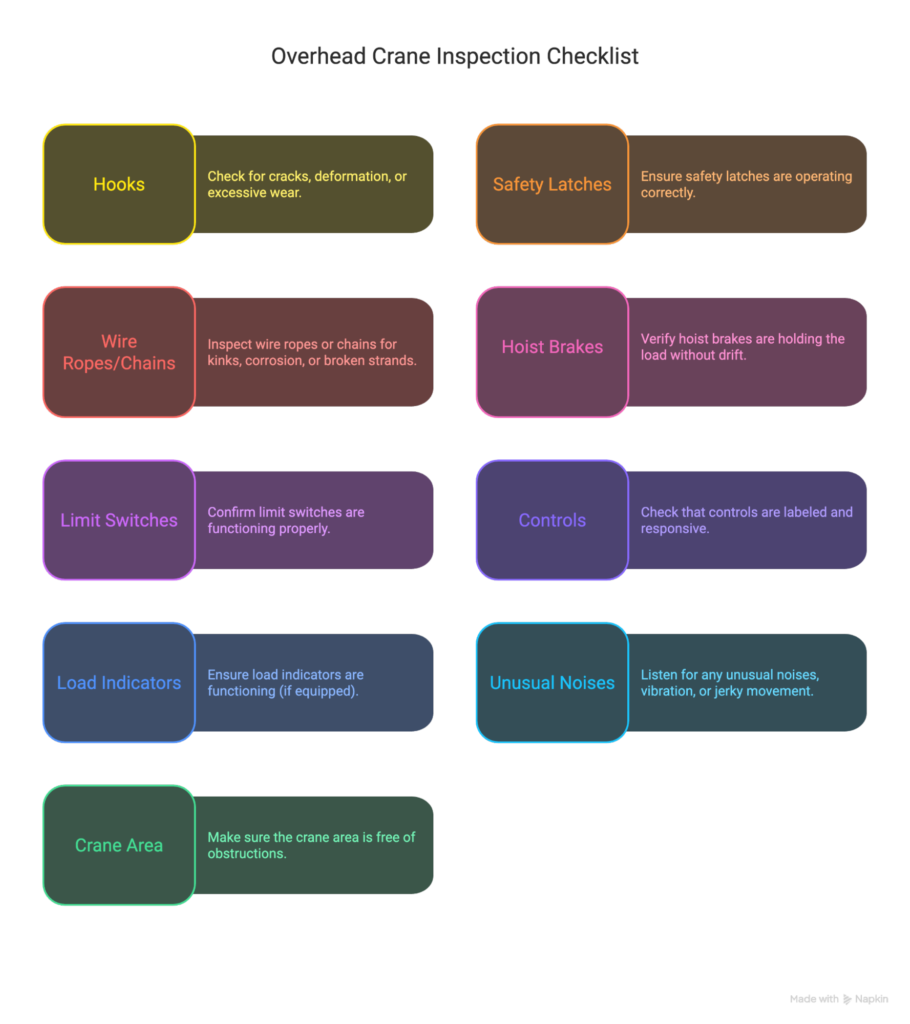
What’s inspected during frequent checks?
- Hooks (cracks, deformation, latch operation)
• Hoist chains or wire ropes
• Limit switches
• Brakes
• Load indicators
• Control mechanisms
These inspections do not require written certification, but issues must be corrected immediately.
If a defect affects safe operation, the crane must be removed from service.
Periodic Overhead Crane Inspections (1–12 Months)
Periodic inspections are more detailed and must be documented.
How often?
- At least once every 12 months
• As often as every 1–3 months for severe service
• Determined by usage, environment, and load severity
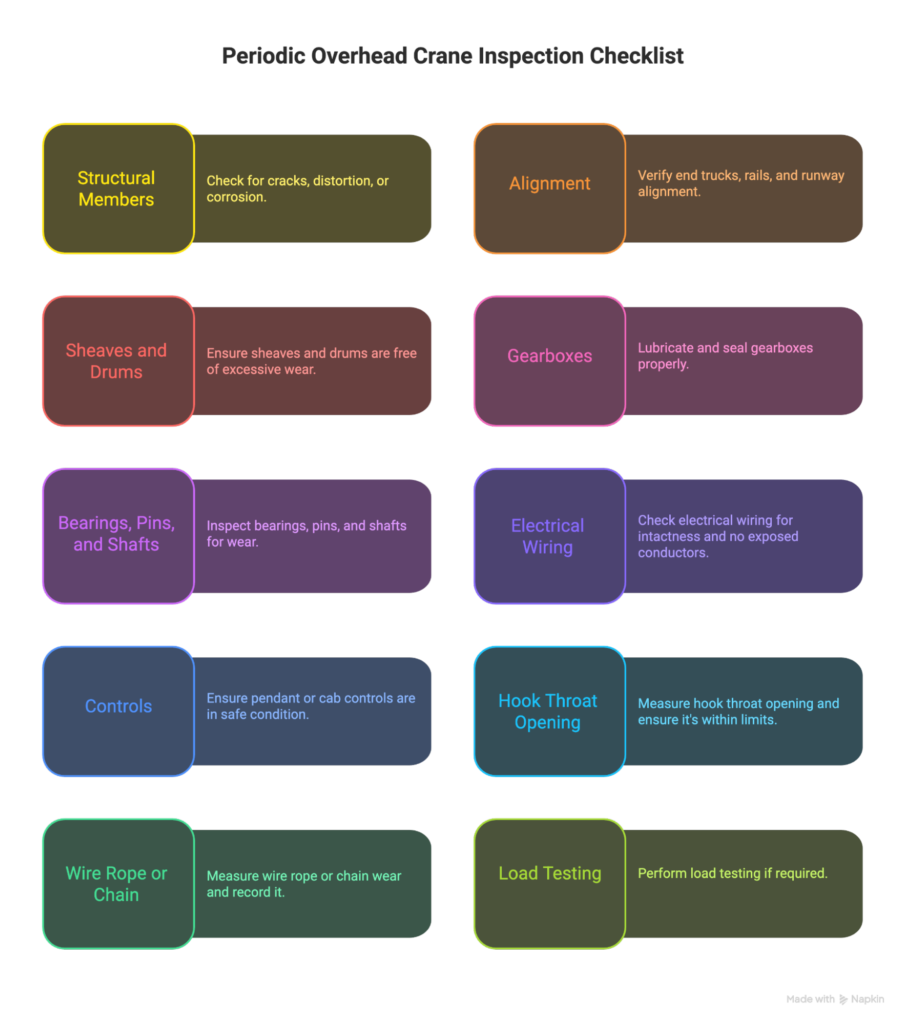
What’s inspected during periodic inspections?
- Structural members
• Sheaves and drums
• Gearboxes
• Electrical systems
• Bearings
• Pins, shafts, and fasteners
• Wear measurements on hooks, chains, and ropes
Documentation is required
OSHA expects written records that include:
• Date of inspection
• Inspector’s name or signature
• Equipment identification
• Any deficiencies found
Missing paperwork is one of the most common OSHA findings.
Special Inspections You Can’t Skip
In addition to scheduled inspections, OSHA requires inspections when conditions change.
Special inspections are required:
• After cranes are idle for extended periods
• After major repairs or modifications
• After overload events
• Before returning equipment to service
Skipping these inspections is considered a serious violation.
What OSHA Inspectors Look for in the Real World
During inspections, OSHA typically checks:
• Whether inspection intervals are appropriate
• If documentation exists and is current
• Whether defects were corrected promptly
• If unsafe cranes were removed from service
The most common issue isn’t failure—it’s missing or inconsistent records.
Who Is Responsible for Overhead Crane Inspections?
Employers are responsible for ensuring:
• Inspections occur on schedule
• Inspectors are qualified
• Records are maintained
• Unsafe equipment is tagged out
Delegating inspections does not transfer liability.
Why Inspection Frequency Matters Beyond Compliance
Regular inspections:
• Reduce unplanned downtime
• Extend equipment life
• Lower injury risk
• Protect operators and riggers
• Reduce liability exposure
Cranes don’t fail all at once. Problems show up gradually—if someone is looking.
Final Thoughts
So, how often should overhead cranes be inspected?
- Daily to monthly for frequent inspections
- Every 1–12 months for periodic inspections
- Immediately after repairs, idle periods, or abnormal events
If your inspection schedule isn’t documented—or doesn’t match how your cranes are actually used—OSHA will treat that as noncompliance.
If your inspection schedule isn’t documented—or doesn’t match how your cranes are actually used—OSHA will treat that as noncompliance.
Being inspection-ready isn’t about checking a box. It’s about being able to demonstrate that your cranes are safe, maintained, and monitored the way OSHA expects—before an inspector asks.
If you need help validating inspection frequency, closing documentation gaps, or building an inspection program that holds up under OSHA review, Crane 1 can help.
Frequently Asked Questions
How often does OSHA require overhead crane inspections?
OSHA requires overhead cranes to be inspected on two schedules: frequent inspections performed daily to monthly, and periodic inspections performed every 1 to 12 months, depending on usage, environment, and severity of service.
Are daily overhead crane inspections mandatory?
Yes. For cranes in regular use, OSHA expects a visual and operational inspection to be performed at the start of each shift or workday. These are considered frequent inspections.
Do overhead crane inspections need to be documented?
Frequent inspections do not require written documentation, but periodic inspections do. Periodic inspection records must include the inspection date, inspector identification, equipment identification, and any deficiencies found.
What happens if an overhead crane fails inspection?
If an inspection reveals a condition that affects safe operation, the crane must be removed from service immediately until the issue is corrected. Continued use is considered an OSHA violation.
Who is allowed to inspect an overhead crane?
Inspections must be performed by a designated and qualified person. The employer is responsible for ensuring the inspector has the appropriate knowledge and experience.
How long must overhead crane inspection records be kept?
OSHA does not specify an exact retention period, but records must be available and current at the time of inspection. Best practice is to retain records for at least the life of the equipment or several inspection cycles.
Are special inspections required after repairs or downtime?
Yes. OSHA requires special inspections after major repairs, modifications, extended idle periods, or abnormal operating events before the crane is returned to service.