
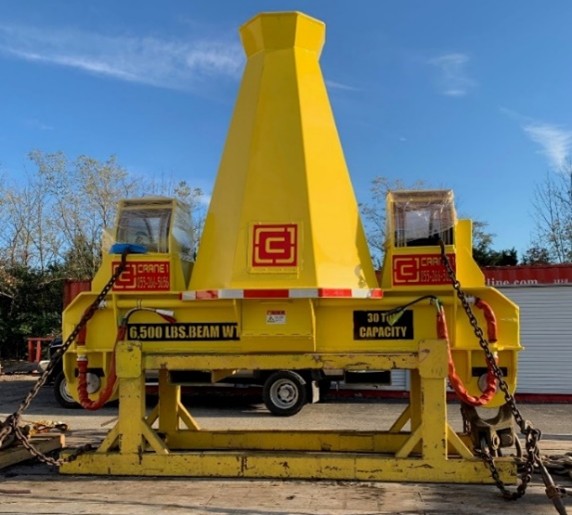
Below the hook lifting devices play a critical role in daily lifting operations, but they are often overlooked until something fails. If your facility is not actively inspecting and documenting these devices, you may already be out of compliance with ASME standards.
Crane 1 works with industrial teams to inspect, repair, and rebuild below the hook (BTH) lifting devices so operations stay safe, compliant, and running without disruption.
Key Summary
Below the hook lifting devices must be inspected at least annually under ASME standards. Regular inspections and rebuilds reduce safety risk, prevent downtime, and extend the life of your equipment. If you do not have records or a clear inventory, that is the first issue to solve.
What Are Below the Hook Lifting Devices?
Below the hook lifting devices are attachments used under a crane hook to handle loads safely. These are part of the lifting system and must be maintained the same way as the crane itself.
Common below the hook lifting devices include spreader beams, C-hooks, coil grabs, hook blocks, tongs, and custom lifting devices.
If these devices fail, the impact is immediate. Production stops. Safety risk increases. Costs follow quickly.
ASME Requirements for Below the Hook Inspection
ASME standards require both frequent and periodic inspections of below the hook lifting devices. Frequent inspections may be monthly depending on usage. Periodic inspections must occur at least once per year.
These inspections must be documented. That is where many facilities fall short.
Common gaps include no inventory, no inspection records, and no documentation of repairs.
Inspections are one of the simplest and most cost-effective ways to reduce liability and avoid unplanned downtime.
Below the Hook Lifting Device Inspection Services
Crane 1 provides full inspection services for below the hook lifting devices across heavy industry environments.
This includes on-site walkdowns, full inventory creation, documented inspection reports, and compliance alignment with ASME standards.
If issues are identified, you get a clear plan to address them.
For companies already working with a crane service provider, this should be part of your ongoing crane inspection and maintenance program.
Below the Hook Lifting Device Repair and Rebuild Services
Many below the hook lifting devices do not need to be replaced. They can be rebuilt.
Crane 1 provides repair and rebuild services that restore equipment to meet or exceed OEM and industry standards.
Rebuilding typically results in 30% to 50% cost savings compared to new equipment, along with faster turnaround times and reduced disruption to operations.
This is especially important for facilities where long lead times can impact production.
Below the Hook Lifting Device Refurbishment
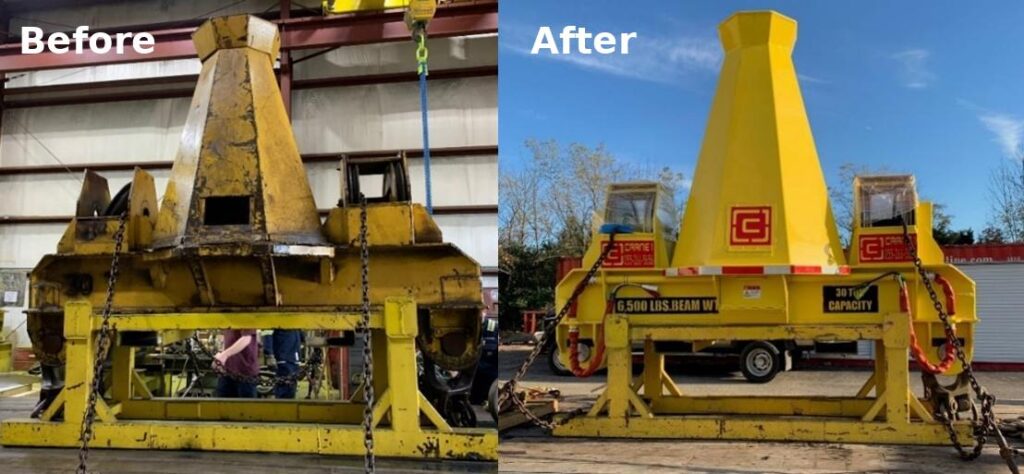
Below the hook lifting device refurbishment focuses on restoring critical lifting components to safe, compliant working conditions without the cost of full replacement. This process typically includes detailed inspection, structural repairs, load testing, and updating components to meet current OSHA and ANSI standards. Refurbishment helps extend equipment life, improve safety, and ensure reliable performance in demanding environments. For operations managing aging or heavily used lifting devices, it is a practical way to maintain compliance and reduce downtime while protecting long-term capital investment.
Equipment Types for Below the Hook Lifting Devices
Crane 1 supports a wide range of below the hook lifting devices used across industrial lifting environments. These devices are often custom to your operation, which makes proper inspection and maintenance critical.
Equipment types include lifting beams, tongs, vacuum lifters, telescoping lifters, and parallel lifters. Specialized equipment such as power rotating crane hooks, C-hooks, pallet lifters, and magnet lifting devices are also commonly used in heavy material handling.
Each of these below the hook lifting devices requires proper inspection, documentation, and maintenance to remain compliant and safe in operation.
Below the Hook Lifting Device Applications
Crane 1 supports lifting applications including coils, plate and sheet handling, blocks, slabs, and ingots. Additional applications include rounds, bar and pipe handling, billets, paper rolls, and mill roll handling.
These devices are also used in maintenance and repair operations, dip tank galvanizing environments, and high-temperature applications such as hot metal and foundry work.
Matching the right below the hook lifting device to the application is critical. Improper use or wear can lead to failure, downtime, and safety risks.
Industries That Rely on Below the Hook Lifting Devices
Below the hook lifting devices are widely used across industries where cranes are essential to operations.
Crane 1 works with steel mills, steel processors, paper mills, and electricity generation facilities. These environments depend on consistent lifting performance to maintain production.
Any operation with a large number of below the hook lifting devices should have a structured inspection and maintenance program in place. Without it, risk compounds quickly.
When Should You Inspect or Rebuild Below the Hook Lifting Devices?
You should evaluate your below the hook lifting devices if it has been more than 12 months since the last inspection, if you do not have inspection records, or if devices show signs of wear or damage.
Other triggers include unexpected downtime, audit preparation, or changes in lifting requirements.
Waiting typically leads to higher repair costs and increased operational risk.
Why Below the Hook Maintenance Impacts Operations
Below the hook lifting devices are directly tied to uptime. When they fail, production stops.
Regular inspection and maintenance reduce unplanned downtime, improve safety, extend equipment life, and prevent emergency repairs.
This is not just a compliance requirement. It directly affects operational performance.
Get a Below the Hook Lifting Device Evaluation
If you are managing multiple below the hook lifting devices, the first step is understanding what you have and where it stands.
Crane 1 can perform a full evaluation of your equipment, document current conditions, and provide a clear path for inspection, repair, or rebuild.
This is how you reduce risk, stay compliant, and keep operations moving without interruption.
If you are unsure where you stand today, that is the starting point. Contact us today to get started.
Frequently Asked Questions
What are below the hook lifting devices?
Below the hook lifting devices are attachments used under a crane hook to lift, support, or secure loads. These include spreader beams, C-hooks, coil grabs, and custom lifting devices used in industrial environments.
How often do below the hook lifting devices need to be inspected?
Below the hook lifting devices must be inspected at least once per year under ASME standards. Depending on usage, frequent inspections may also be required on a monthly basis.
What ASME standards apply to below the hook lifting devices?
Below the hook lifting devices are governed by ASME B30.20 and ASME BTH-1, along with related standards such as ASME B30.9 and B30.26 depending on the device type and application.
Can below the hook lifting devices be repaired instead of replaced?
Yes. Many below the hook lifting devices can be repaired or rebuilt to meet or exceed OEM and industry standards. Rebuilding is often more cost-effective and faster than full replacement.
What happens if below the hook lifting devices are not inspected?
Failure to inspect below the hook lifting devices can lead to safety risks, equipment failure, unplanned downtime, and potential non-compliance with ASME standards.
What industries use below the hook lifting devices?
Below the hook lifting devices are commonly used in manufacturing, steel production, mining, and heavy industrial environments where cranes are used for material handling.
How do I know if my facility is compliant?
If you do not have a documented inventory of your below the hook lifting devices or records of inspections within the past 12 months, you are likely not fully compliant.