
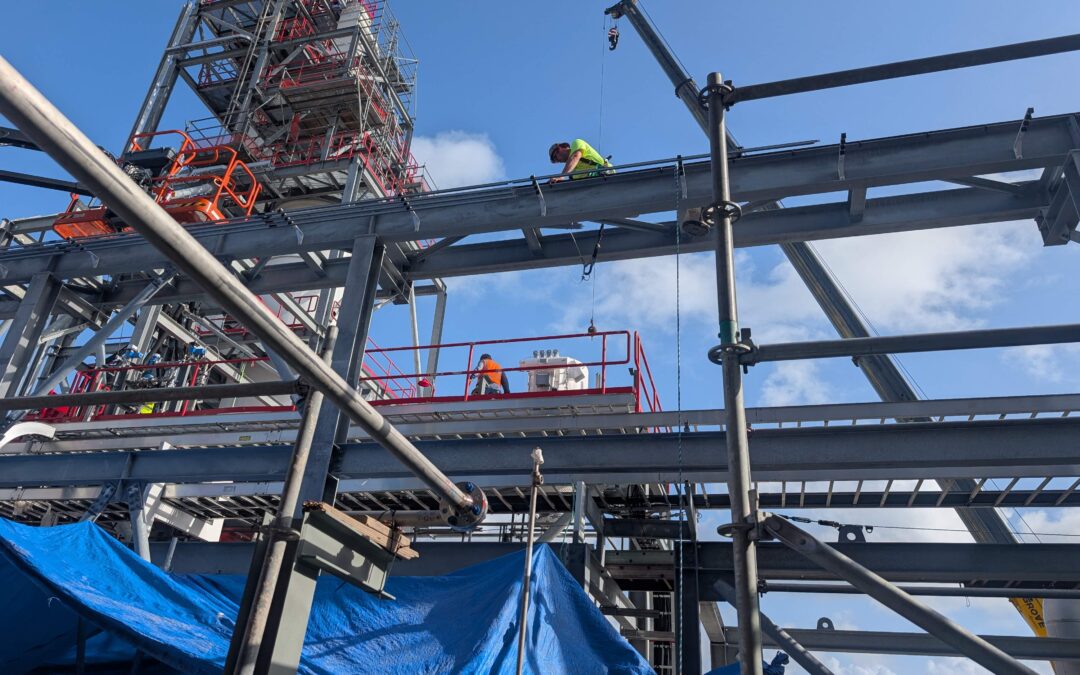
In overhead crane and industrial environments, PPE is not a suggestion — it is a requirement. OSHA mandates it. Crane 1 enforces it. And facilities that treat it as optional create serious risk for their people, their operations, and their compliance posture.
This guide covers what PPE is required in overhead crane environments, what OSHA standards apply, how to conduct daily equipment safety checks, and how to properly execute lockout/tagout before any service work begins.
What Is PPE?
Personal Protective Equipment (PPE) refers to specialized clothing and equipment worn to reduce exposure to workplace hazards that can cause injury or illness. In industrial and overhead crane environments, PPE acts as the final barrier between workers and hazards including falling objects, electrical shock, arc flash, flying debris, sharp edges, chemical exposure, excessive noise, and slips, trips, and falls.
PPE does not eliminate hazards — it protects workers when hazards cannot be fully engineered out of the environment. That distinction matters: PPE is the last line of defense, not the first. Engineering controls, safe work procedures, and equipment maintenance come first. PPE covers the gap.
Common PPE Required in Overhead Crane and Industrial Work
The specific PPE required at any given facility depends on a hazard assessment. The following are the most common categories seen in overhead crane and industrial maintenance environments.
Head Protection
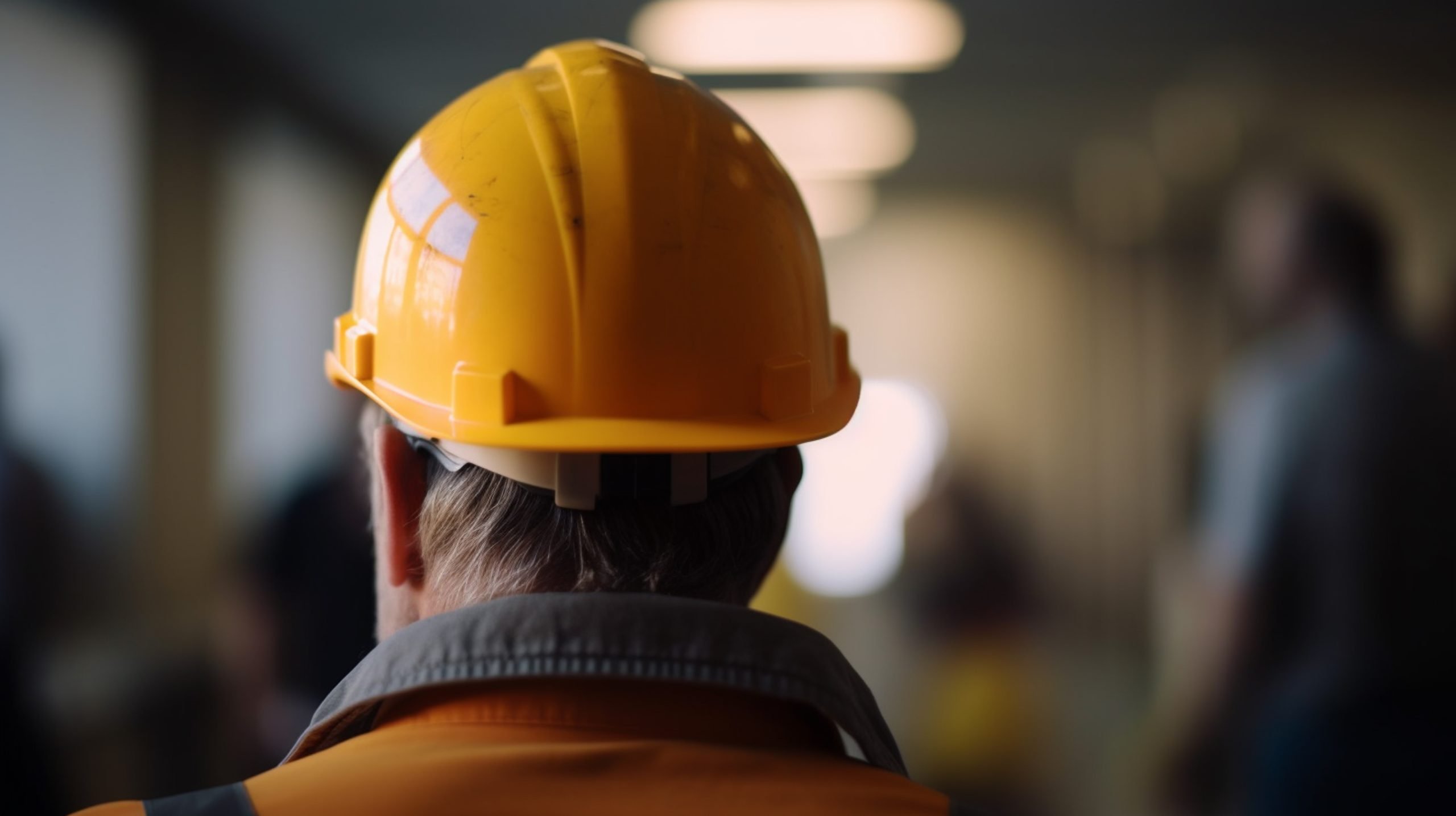
Hard hats protect against impact from falling objects — a constant risk in any facility where overhead crane or hoist work is being performed. Head protection is required any time overhead work is in progress, not just during crane operation.
Eye and Face Protection
Safety glasses with side shields are the baseline standard. Face shields are required for grinding, cutting, or welding operations. In arc flash environments, rated face protection is non-negotiable.
Hearing Protection
Earplugs or earmuffs are required in high-noise environments. Steel mills, fabrication facilities, and high-duty-cycle crane operations frequently exceed safe noise exposure thresholds. Hearing loss from chronic industrial noise exposure is permanent — protection must be consistent, not occasional.
Hand Protection
Cut-resistant gloves are standard for work involving wire rope, rigging components, and metal edges. Electrically-rated gloves are required when working on or near energized equipment. Glove selection must match the specific hazard — general-purpose gloves do not provide adequate protection in all situations.
Foot Protection
Steel-toe or composite-toe boots with slip-resistant soles are required in any environment where heavy components, crane hooks, or rigging equipment could contact the feet. Slip-resistant soles matter in facilities where floor surfaces are wet, oily, or debris-covered.
High-Visibility Clothing
Safety vests or high-vis shirts improve worker visibility around moving equipment and vehicles. In facilities where cranes and forklifts operate in shared spaces, high-visibility clothing is critical to reducing struck-by incidents.
Fall Protection
Harnesses, lanyards, and anchor systems are required when working at height — including crane runway access, bridge inspections, and elevated maintenance work. Fall protection requirements are triggered at four feet in general industry under OSHA standards.
Respiratory Protection
Dust masks or respirators are required when working in contaminated or particulate-heavy environments. Facilities with painting, grinding, or chemical handling operations should have a written respiratory protection program in place.
OSHA PPE Requirements
OSHA establishes specific PPE standards under 29 CFR 1910 for general industry. The key standards applicable to overhead crane and industrial maintenance environments include:
- 29 CFR 1910.132 — General PPE requirements: hazard assessment, provision, and training
- 29 CFR 1910.133 — Eye and face protection standards
- 29 CFR 1910.135 — Head protection requirements
- 29 CFR 1910.136 — Foot protection requirements
- 29 CFR 1910.147 — Lockout/Tagout: the control of hazardous energy
- 29 CFR 1910.146 — Permit-required confined spaces
Under these standards, employers are required to assess workplace hazards, provide appropriate PPE at no cost to employees, train workers on proper use and care of PPE, replace damaged or worn-out equipment, and enforce consistent usage across all affected personnel. Documentation of hazard assessments and PPE training is required — and is an OSHA audit target.
Daily Equipment Safety Checks
PPE protects workers. Equipment safety checks protect everyone. Before operating or working around an overhead crane or hoist, workers should inspect the following at the start of every shift:
- Hooks and latches for deformation, cracks, or latch failure
- Wire ropes and chains for kinking, corrosion, broken wires, or wear
- Limit switches for proper function
- Pendant controls for damage, missing labels, or erratic response
- Brakes for proper holding and response
- Warning labels for legibility and completeness
- Structural components for visible cracks, deformation, or loose connections
If any component shows signs of damage or malfunction, the equipment must be taken out of service immediately and tagged out until inspected and repaired by a qualified technician. Operating equipment with a known deficiency is an OSHA violation — and a safety risk that cannot be rationalized by production pressure. Learn more about Crane 1 inspection services and how structured programs support daily compliance.
Lockout/Tagout (LOTO)
Lockout/Tagout is one of OSHA’s most critical safety requirements — and one of its most frequently cited violations. Before any service or maintenance work is performed on overhead crane equipment, all hazardous energy must be controlled. The LOTO procedure follows a specific sequence that must not be abbreviated:
Step 1
Shut Down the Machine
Follow the equipment’s normal stopping procedure. Notify affected personnel that a shutdown is occurring and LOTO is being applied.
Step 2
Isolate All Energy Sources
Identify and isolate every energy source — electrical, pneumatic, hydraulic, mechanical, and gravitational. Do not proceed until all sources are identified.
Step 3
Apply Locks and Tags
Each authorized employee applies their personal lock and tag to every energy isolation point. One worker, one lock — no shared locks.
Step 4
Verify Zero Energy
Test the equipment to confirm zero energy state before any work begins. Attempt to start the equipment to verify it will not operate. Check for residual stored energy — spring tension, gravity loads, capacitor charge.
Step 5
Perform Maintenance Safely
Work may now begin. Locks and tags remain in place for the duration of the work. Upon completion, reverse the LOTO sequence in order and confirm the area is clear before restoring energy.
LOTO prevents unexpected equipment startup — the cause of hundreds of serious industrial injuries every year. Every Crane 1 technician follows LOTO procedures on every service call, without exception. Facilities should expect the same standard from any service provider working on their equipment.
The Crane 1 Safety Standard
Everyone goes home safe every day. That is not a slogan — it is the operating standard at Crane 1. PPE is required on every job site, every visit, without exceptions for experienced technicians or routine tasks. Equipment safety checks are performed before work begins. LOTO is applied before any service work is performed on overhead crane or hoist equipment.
When you work with Crane 1, you are working with a team that takes safety as seriously as you do. Our crane and hoist operator training programs extend that standard to your team — covering safe operation, hazard recognition, inspection procedures, and emergency response. Our proactive maintenance programs keep equipment in the condition that makes safe operation possible. And our INSPEC compliance inspections give your facility documented evidence that your equipment meets OSHA standards.
Contact Crane 1 to discuss safety programs, inspection schedules, or operator training for your facility. For additional resources, visit the Crane 1 resource blog.
Frequently Asked Questions
Q.Is PPE required for overhead crane operations?
Yes. OSHA requires employers to assess workplace hazards and provide appropriate PPE under 29 CFR 1910.132. In overhead crane environments, head protection, eye protection, foot protection, and high-visibility clothing are typically required at minimum. Additional PPE depends on the specific tasks being performed.
Q.Who is responsible for providing PPE?
The employer is responsible for providing PPE at no cost to employees under OSHA standards. Employers must also train employees on the proper use, care, and limitations of the PPE provided, and replace equipment that is damaged or no longer serviceable.
Q.What is the difference between LOTO and PPE?
PPE protects workers from hazards during normal operations. Lockout/Tagout (LOTO) controls hazardous energy before service or maintenance work begins — preventing equipment from starting unexpectedly while someone is working on it. Both are required; neither substitutes for the other.
Q.Does Crane 1 follow LOTO procedures on every service visit?
Yes. Crane 1 technicians apply lockout/tagout procedures before performing any service or maintenance work on overhead crane and hoist equipment, on every visit, without exception. This is a non-negotiable part of how we operate on every job site.
Q.Does Crane 1 offer operator safety training?
Yes. Crane 1 provides crane and hoist operator training covering safe operation, hazard recognition, inspection procedures, emergency shutdown, and OSHA compliance requirements. Training is available for facilities of all types and sizes.