
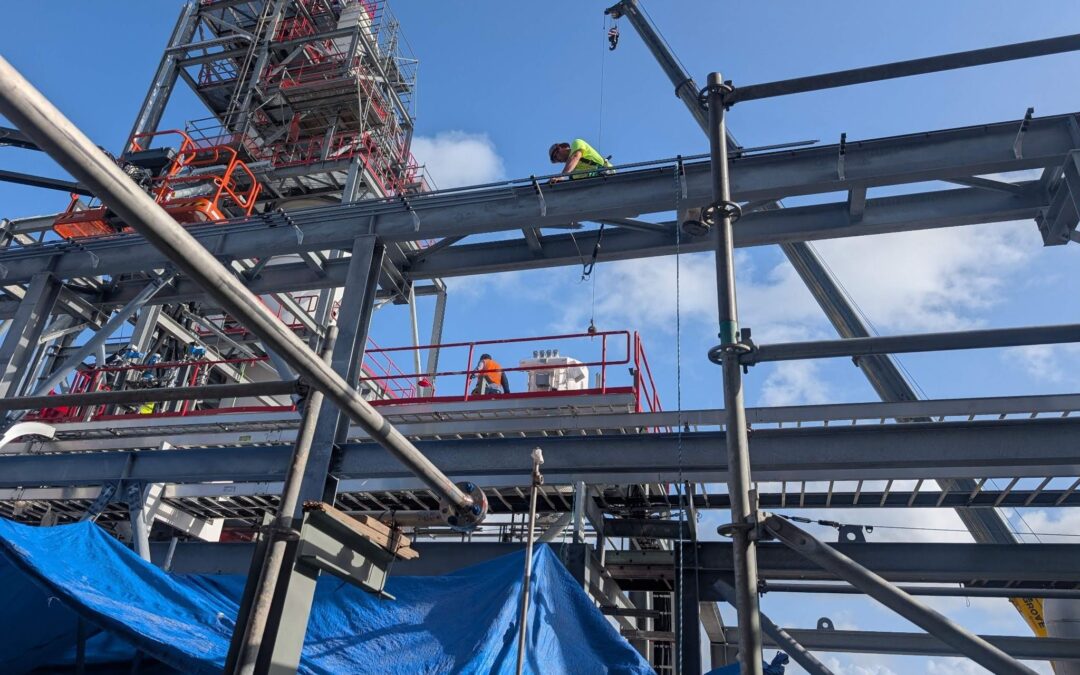
A crane inspection failure is one of the most disruptive events in an industrial facility’s calendar. It stops production, raises liability questions, and puts a compliance clock on your maintenance team. But it does not have to become a crisis — if you know what to do next.
This guide walks through the immediate steps to take after an overhead crane fails inspection, the most common reasons cranes fail, what OSHA requires once a deficiency is identified, and how to build a path back to compliant, safe operation. If your crane just failed inspection and you’re not sure where to start, start here.
Step 1
Remove the Crane from Service Immediately
This is not optional. OSHA standard 1910.179(j) is clear: any crane with a known deficiency that affects safe operation must be removed from service and tagged out until repairs are completed and the equipment is re-inspected and approved for use.
Do not allow the crane to continue operating while the deficiency is being assessed, parts are on order, or repairs are being scheduled. The legal and safety exposure from operating a crane with a known inspection failure is significant. If production pressure is pushing back, the answer is still no — tag it out.
Lockout/tagout procedures should be applied immediately. Signage should be placed at the crane controls and at access points to the crane bay or runway. Document the date and time the crane was removed from service.
Step 2
Review the Inspection Report in Detail
Not all inspection findings carry the same weight. A well-written inspection report should categorize deficiencies by severity — commonly as critical (remove from service immediately), serious (address before next use), or advisory (monitor and schedule repair). Review the report carefully and understand exactly what was found, where, and why it matters.
If the inspection report is unclear or does not explain the specific deficiency in operational terms, ask the inspector to clarify. You need to understand whether the failure is structural, mechanical, electrical, or documentation-based — because each category requires a different response path. Common categories include:
- Structural deficiencies — cracked welds, deformed end trucks, runway misalignment, hook damage
- Mechanical deficiencies — worn brakes, failing gearboxes, hook latch failure, excessive wire rope wear
- Electrical deficiencies — control failures, festoon system damage, limit switch malfunction, collector bar issues
- Documentation deficiencies — missing inspection records, no load test documentation, unresolved prior deficiencies
Step 3
Understand Your OSHA Obligations
Once a crane has a documented inspection deficiency, OSHA regulations create specific obligations for the employer. These include removing the crane from service, repairing the deficiency before returning the crane to use, documenting that repairs were completed, and having the crane re-inspected before placing it back in service.
The re-inspection requirement is one that many facilities overlook — a repair alone does not return the crane to service. A qualified INSPEC inspection must confirm the deficiency has been resolved.
If the failed inspection was conducted by a third party — an insurance inspector, a customer-required audit, or an OSHA compliance officer — you may also have documentation or response obligations tied to that relationship. Review the terms of your inspection agreement and any applicable insurance requirements.
Do not assume that because the crane’s condition hasn’t changed that the OSHA clock isn’t running. Once a deficiency is documented, you own it.
Step 4
Get a Qualified Crane Service Provider on Site
After understanding what failed and what OSHA requires, your next call should be to a qualified crane service provider. CRANE 1’s crane repair services are available 24/7/365 and cover all crane and hoist brands. Crane repair after an inspection failure requires:
- Technicians who specialize in overhead cranes and hoists
- Access to OEM or OEM-compatible replacement parts for the specific crane and hoist brand
- Experience working in your type of facility under active production conditions
- Proper documentation of the repair for compliance records — supported by our asset management program
- The ability to perform or coordinate the post-repair re-inspection
If the failure involves structural issues — weld cracks, bridge beam damage, runway problems — ensure the service provider has the engineering resources to assess and certify the repair properly. Structural repairs on overhead cranes are not routine maintenance tasks.
Step 5
Document Everything
The documentation trail from an inspection failure through repair and re-inspection is a critical compliance asset. CRANE 1’s asset management program helps facilities maintain organized, OSHA-aligned records throughout the lifecycle of their equipment. In the event of a future OSHA inspection, insurance claim, customer audit, or incident investigation, your documentation is your defense. Your package should include:
- The original inspection report identifying the deficiency
- The date and time the crane was removed from service
- Lockout/tagout records
- Repair work order, technician credentials, and parts used
- Post-repair inspection report confirming resolution of the deficiency
- The date the crane was returned to service and by whose authorization
Most Common Reasons Overhead Cranes Fail Inspection
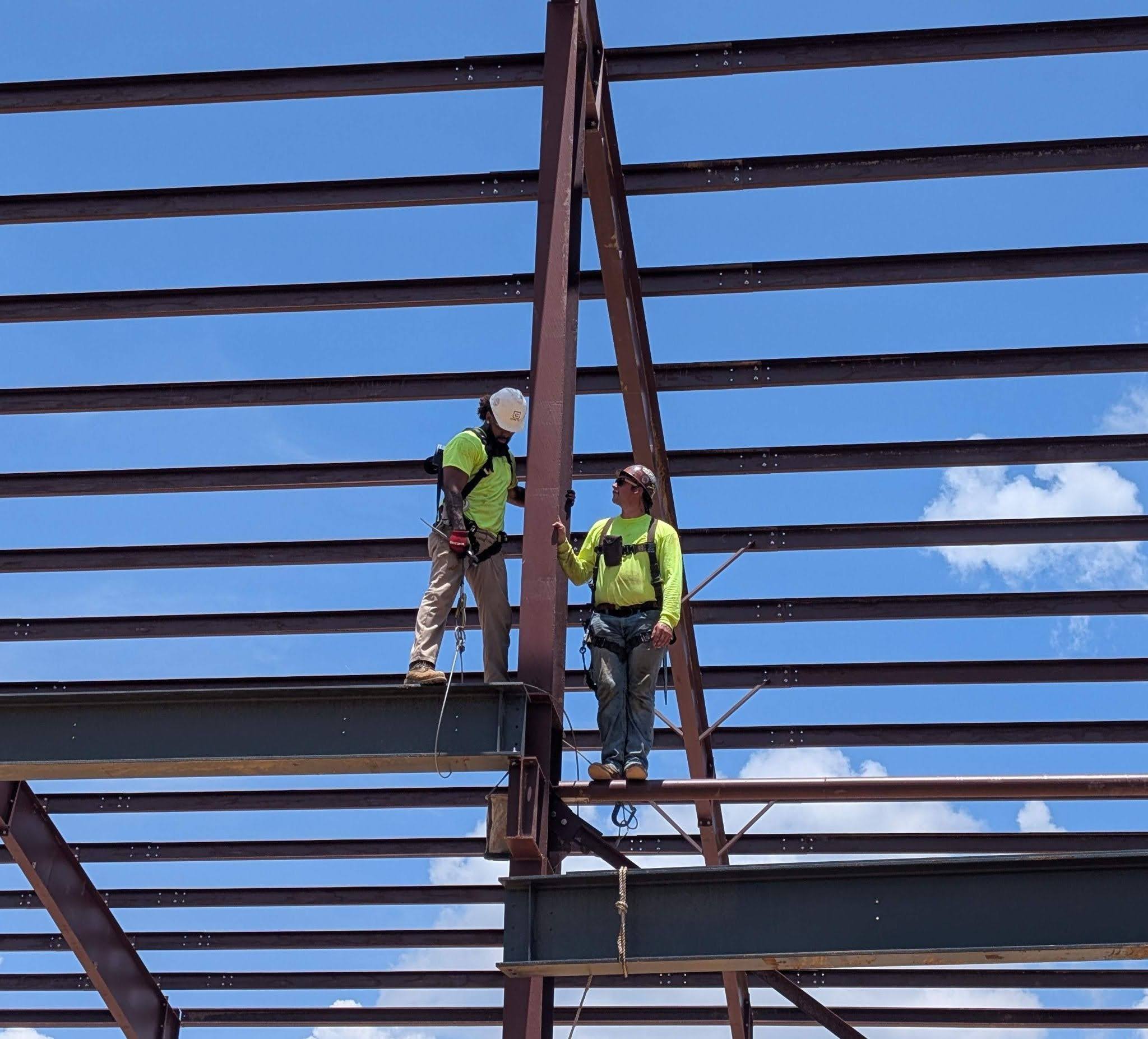
Understanding why cranes fail inspection is the first step toward preventing the next failure. The most frequent causes we see across facilities of all sizes and industries include:
Wire Rope and Hoist Wear
Wire rope is subject to mechanical fatigue, corrosion, and physical damage. ASME B30.2 and B30.16 establish specific discard criteria — certain wire rope conditions require immediate removal regardless of age or service hours. Many facilities run wire rope past its safe service life because it “looks okay.” A qualified CRANE 1 inspector applies the actual discard standards, not a visual estimate.
Brake Deterioration
Hoist brakes are among the most inspection-sensitive components on an overhead crane. Worn brake linings, improper adjustment, or sluggish brake response are consistent failure points. A brake that holds a load in normal production may not perform to ASME standards during an inspection test. Our preventive maintenance programs include brake adjustment and lining checks on defined intervals.
Hook Damage and Latch Issues
Hooks that show signs of throat opening (stretching), cracks, or twist are automatic removal-from-service items. Latch mechanisms that do not function reliably are also common deficiency points. Below-the-hook components are frequently abused in production environments and are a high-frequency inspection failure item.
Limit Switch Failures
Upper and lower limit switches on hoists are required safety devices. A non-functioning limit switch is a serious deficiency. These electrical control components are often overlooked between inspections and fail from wear, vibration, or environmental exposure.
Documentation Gaps
A surprising number of inspection failures in industrial facilities are documentation failures — not equipment failures. Missing inspection records, no evidence of prior deficiency resolution, absent load test documentation, or equipment without proper identification can all result in a failure even when the crane itself is in adequate condition. CRANE 1’s asset management program exists specifically to close this gap.
Structural and Weld Issues
Fatigue cracks in bridge beams, end trucks, or runway rails — particularly at weld joints and connection points — are serious structural deficiencies that require immediate attention. High-duty-cycle cranes in demanding environments are particularly susceptible to structural fatigue over time.
How to Prevent the Next Inspection Failure
The best response to a crane inspection failure is making sure it doesn’t happen again. The facilities that maintain the strongest crane inspection records share a few common practices: they run structured preventive maintenance programs on defined intervals — not when something breaks. They conduct internal pre-inspection walk-downs before scheduled third-party or compliance inspections to identify and address issues proactively. They maintain organized, accessible documentation through a dedicated asset management program. And they work with a crane service provider who understands both the equipment and the regulatory environment.
A crane that fails inspection is a symptom. The underlying cause is usually a gap in the maintenance and documentation program — and that gap is fixable. For more guidance, explore the CRANE 1 resource blog and see why facilities across the country trust CRANE 1 to keep their operations compliant.
CRANE 1 Can Help You Recover — and Stay Compliant
If your overhead crane failed inspection, CRANE 1 is ready to respond. Our certified technicians handle emergency repairs, post-failure documentation, re-inspection coordination, and preventive maintenance program development for industrial facilities of all types and sizes. We work on all major crane and hoist brands and operate 24/7/365 for emergency response. Find your nearest CRANE 1 location or contact us today to build a path back to compliant, safe crane operation.
Frequently Asked Questions
Q.Can I keep using a crane that failed inspection?
No. OSHA 1910.179 requires that any crane with a deficiency affecting safe operation be removed from service until the deficiency is corrected. Operating a crane with a documented inspection failure creates serious safety and legal exposure. Contact CRANE 1’s repair team immediately if your crane is tagged out.
Q.How quickly can a failed crane be repaired and returned to service?
Timeline depends on the nature of the deficiency. Mechanical and electrical repairs with available parts can often be completed in one visit — CRANE 1 stocks parts for all major brands on our service vehicles. Structural repairs or complex electrical issues may take longer. Our team prioritizes emergency response and expedites parts to minimize downtime.
Q.Does the crane need to be re-inspected after repair?
Yes. OSHA and ASME standards require a crane to be re-inspected after repair before being returned to service. CRANE 1 coordinates repair and re-inspection as an integrated service so facilities can return to operation as quickly as possible.
Q.What if our crane fails on a documentation issue, not a mechanical one?
Documentation deficiencies are real OSHA deficiencies. CRANE 1’s asset management program helps facilities build and maintain documentation systems — inspection records, deficiency logs, equipment ID, and interval tracking — that hold up to scrutiny and prevent documentation-based failures from recurring.
Q.How do we prevent crane inspection failures in the future?
The most effective prevention is a structured preventive maintenance program combined with organized, complete inspection documentation supported by a robust asset management program. Contact CRANE 1 to develop a customized program for your facility, and visit our resource blog for additional guidance.